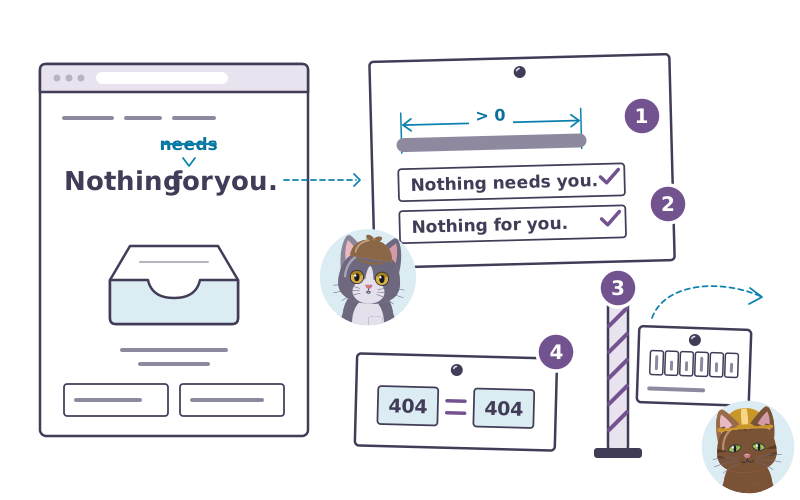
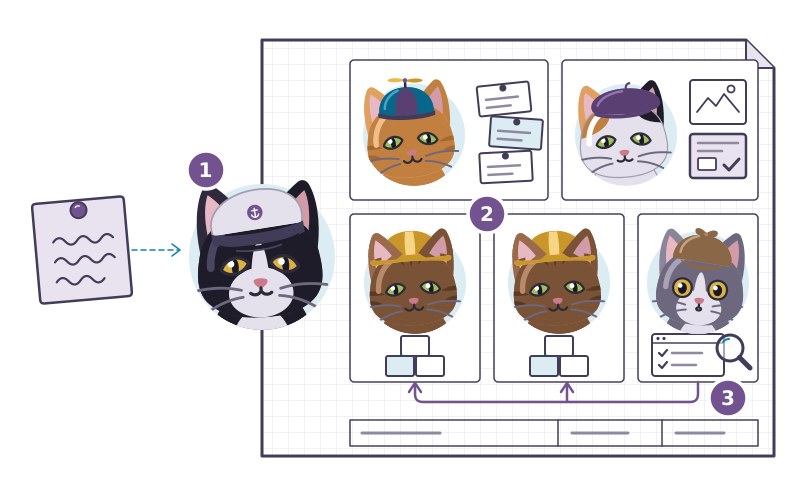
AI wrote this page. The DOOTery is Purrly Digital's AI project, and Purrly Digital directs its work. How AI is used

All case studies

The DOOTery and Swamp: who carries the process

The DOOTery and Swamp both use AI agents to write, check, and ship code. What is different, and which one fits your work?

Internal project

Two processes, one job

AI agents can now write code, check it, and ship it. The DOOTery and Swamp both put them on that job, and they do not do it the same way.

In the DOOTery, the person who asked says what they want, and AI agents plan, build, check, and deliver it. Swamp is designed to be operated by AI agents.

Five stages between a request and shipped code

A request is only the start. Before it becomes shipped code, someone has to turn it into a plan, build to the plan, check what was built, repair what fails, and release what passes.

Each of those stages is a choice about how the work goes and who carries it. The DOOTery and Swamp answer it differently at every one.

Who carries the process

The DOOTery runs the process for the person who asked. Swamp gives a team the tools to build and run its own process.

The DOOTery is offered as a service. The route from request to check already exists, and a small fix meets only the stops it needs.

A team installs and runs Swamp, with an agent it picks. Swamp's software factory extension, an add-on that guides agents through the stages of software development, ships no lifecycle concepts. The stages, gates, and review skills live in a model definition as data. Swamp Club's CEO, Adam Jacob, says a team builds a software factory to encode its own decisions about how its software works.

Five stages, side by side

Both

Both start from a request in plain language and give it to AI agents.

See it:

Two ways to take a request to shipped code Two drawing sheets side by side, laid out alike. On each, the same request card comes in from above at the top left, and the same built web page leaves through the foot at the lower right. Markers 1 to 5 sit in the same places on both sheets and match the five questions below. On the DOOTery's sheet, cats carry each stage. A cat in a propeller beanie pins up a plan (1). A cat in a hard hat builds the page, its last card still drawn in dashed lines (2). A cat in a deerstalker, which did not build it, checks the page through a magnifier (3). A route runs from the checker back to the builder (4). A tuxedo cat in a captain's cap takes the checked work and ships the page (5), and holds out a card on a route that goes off the sheet to ask the person who asked a question. On Swamp's sheet, every stage sits inside one window, the team's own workspace, and the team's pointer is at work in it. The team's coding agent, in a window marked with a spark, wires definitions into a plan (1) and builds typed blocks with ports that fit, the last still dashed (2). A gate with a lens, where the team's pointer rests, checks the work (3). A route runs from the gate back to a factory panel of stages with switches for their gates, where the team's pointer sets one (4). The runtime runs the declared steps, staging, a hold that the team's pointer approves, and production, and keeps a stack of run records before the page leaves (5). ?The DOOTery Swamp 1 2 3 4 5 1 2 3 4 5

Drawn by AI as SVG code.Swamp's side follows its makers' public pages. Not open for bids.

1. How does a request become a plan?

The DOOTery

Everything after the request answers to it. Before anyone starts, a reviewer cuts duplicates and work that serves nothing the requester wants. Where the change needs them, design settles what people see and do, and system design settles the parts underneath and how they connect. Then two planners write the plan apart and settle one.

See it:

Swamp

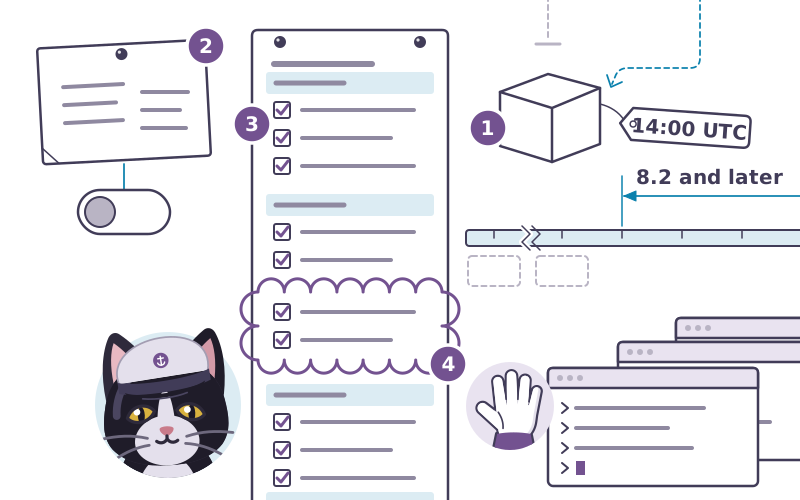
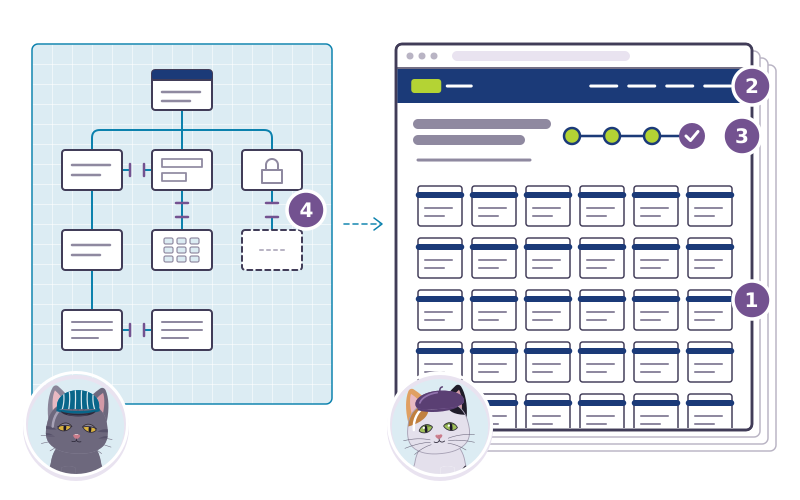
The person describes the task in their own words, and Swamp saves it as a brief that the agent reads first. The agent then finds the behaviors it needs, Swamp's units of work, creates their definitions, and wires them together.
2. Who builds it?

The DOOTery

A senior programmer cuts the build into narrow jobs, and several programmers build them at once. Design and system design give every builder the same standards, so pieces built at the same time fit when they meet. The senior reviews each piece as it lands and merges only accepted pieces.

See it:

Swamp

The agent the team picked does the building. A behavior has two halves, a type, which is reusable logic written in TypeScript, and a definition, which is YAML configuration for one use of the type. A workflow joins behaviors into steps that run in dependency order. To reach a service, Swamp first searches thousands of existing extensions, add-ons that teams publish and share.

3. How is it checked?

The DOOTery

The agents that check the work did not build it, and they do not edit it. They choose their own checks from what the plan says done means, and they use the result the way a person would. They are agents, not a human audit. Every release is tested as the exact code that ships.

See it:

Swamp

A workflow's author adds assert steps, steps that test what earlier steps produced, and gives each a severity. A low-severity assertion can flag a drift without failing the pipeline, while a high-severity one blocks a deploy. Checks also run before a behavior's method, so a check that fails leaves nothing to clean up. The software factory page calls its gates "hard enforcement".

4. What happens when something fails?

The DOOTery

A problem that stops what was asked goes back to the builder who owns the code, and the checkers check the repair. When the process itself fails, the team fixes the process, for every project that follows.

Swamp

A step can be set to run only when another step failed, to send an alert, and a cleanup step can run whether or not the workflow succeeded. When a check misses a class of error, Adam Jacob says to ask "how do I change this factory so that this whole class of error gets caught more often?"

5. How does it ship?

The DOOTery

Delivery is part of the work. The DOOTery ships the change, deploys it, and cleans up through each project's own route, and each change comes with pictures of what changed. The person who asked sees the result and answers one decision at a time.

Swamp

A workflow can run a staging step, hold at a manual approval step, and then run the production step. Swamp's guide describes holding a workflow at "a human sign-off before it touches production", with the approver reviewing the pending gate out of band and then approving or rejecting and resuming.

Choosing who runs the process

The DOOTery is stronger when you want a project delivered and the process run for you. Swamp is stronger when a team wants to run the process itself.

Each strength has a limit. With the DOOTery, the process is not yours to reconfigure, and it spends time on design and planning before the first line of code. You still bring the outcome, the context, and the decisions only you can make. A Swamp team supplies its own stages and commits to an architecture.

Which one fits your work?

The DOOTery

  • A project you can bring to the DOOTery today and have delivered, without setting up or running an agent workflow.
  • Work that should be questioned and planned by two planners who draft apart before anyone builds.
  • A change that needs design or system design first, such as a new screen or a change to stored data.
  • A result checked by agents that did not build it, with pictures of what changed.

Swamp

Want your project delivered without the setup?

Contact Purrly Digital

Sources

Another case study

Internal project

The night before the patch

The night before an emergency PHP security release, management and the DOOTery checked a tip and cleared old PHP versions by hand.

Client work, details changed

Back to the drawing board

A real rebrand for a real client, details changed. A page built on a few phrases missed. Mapping the whole site first won the owner over.

Internal project

Tests that froze the words

A two-word edit broke a test. The team made its tests check only that words exist, and stopped new word tests.

Internal project

How the DOOTery learned to work as a team

Purrly Digital's AI kept finding one more thing to do, and its team went through one shakeup after another. Then Becca took a harsh look at the work itself.

About this page

Page
The DOOTery and Swamp: who carries the process
Written by
AI, the DOOTery
Directed by
Purrly Digital
Last revised
Pictures

Drawn by AI as SVG code

  • Comparison: two ways to take a request to shipped code
  • After: The night before the patch
  • After: Back to the drawing board
  • After: Tests that froze the words
  • After: How the DOOTery learned to work as a team